
 Crystal
 Granite
 Limestone
 Marble
 Onyx
Onyx Travertine
 Block
Block Slab
Slab Stairs
 Tile
Tile Stone Artifacts
 Abrasives
 Segment Disc


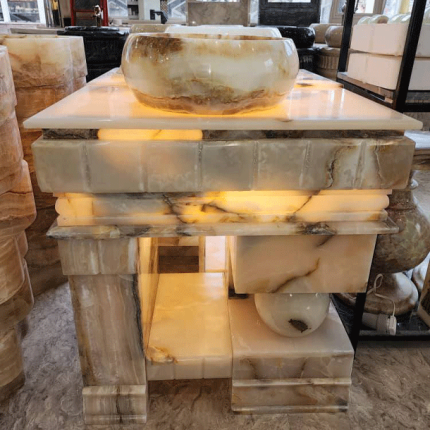

Onyx
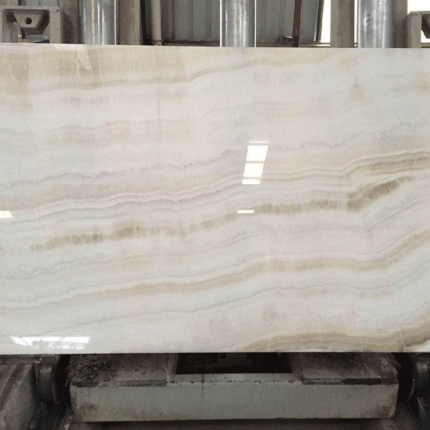
Onyx is often confused with marble. Marble is a very delicate and transparent stone that easily transmits light and, contrary to popular belief, is mined in a variety of colors and patterns.
Onyx is often confused with marble. Marble is a very delicate and transparent stone that easily transmits light and, contrary to popular belief, is mined in a variety of colors and patterns.
Onyx is a chalcedony stone. Chalcedony is a type of quartz microcrystal. Marble is a soft, non-porous, very transparent, and light-transmitting stone. This stone is formed by the boiling of water in layers close to the surface of the earth and is composed of calcium carbonate, magnesium carbonate, copper, iron oxide, and fluorine. Marble is very similar in appearance to marble, and it may be difficult to distinguish the two stones from each other at first glance. However, marble has one difference from marble, which is that marbles are translucent stones that easily transmit light.
Marble is a metamorphic rock formed by boiling water near the surface of the earth and combining with other elements.
Manufacturers also rely on this ability to add color to the epoxy mesh behind the stone. As a result, when light is shone on the marble from behind, the color used in the epoxy behind the stone stands out on the front view. For example, Naqadeh marble is inherently light pink; the manufacturer can enhance the color range of this stone by using pink in the epoxy. For more information about the difference between marble and marble, refer to its article on the Iran Counter website.
Onyx is the same as marble
The Greeks use the word onyx to refer to this stone. Onyx is derived from the word “onyx” meaning claw or nail. The reason for this naming is that marble resembles the texture of a nail in terms of color and light transmission.
How is marble made?
As mentioned in the previous sections, marble is composed of calcium carbonate, magnesium carbonate, copper, iron oxide, and fluorine. Since marble and marmorite have similar ingredients, marble can be considered a commercial sibling of marble. Marble, like marble and travertine, is composed of calcite, or calcium carbonate.
Where marble is formed
Marble is formed in cave entrances and near the surface of the earth.
Marble is a sedimentary rock that is made from stalagmites and stalactites, or the same stalactites that form near the surface of the earth and at the entrances of limestone caves. The rock that is created in this way and under such conditions is called cryptocrystal or hidden crystal.
Onyx is formed from spring water
The flow of spring or groundwater, which is rich in calcite, begins to drip from the caves you see in the image above; each drop is responsible for creating a layer a few thousandths of an inch thick. Crystalline masses of calcite are then formed; as time passes and the water flow increases, other minerals also penetrate these masses. The layers are superimposed on each other and the marble covers the entire limestone cave. In fact, marble can form in any environment that is exposed to groundwater. The difference in the rate of water flow and the amount of impurities in the water leads to the creation of various layers in marble. In its purest form, calcite is white or transparent; but the presence of other minerals can slightly change the color spectrum of marble.
History of the use of marble
The use of marble has a long history in human history; The ancient Egyptians used onyx as a beautiful and magical symbol in jewelry making. Marble was a symbol of courage and strength for the Romans. The ancient Greeks and Persians also used this stone in the making of sculptures and jewelry. In the Middle Ages, this stone was used in the construction of churches and monasteries; marble is known to attract negative forces and in the past it was believed that the color of marble becomes dull when it absorbs negative energy. Today, marble is still used in everything from jewelry to construction and interior design.
.
It is interesting to know that in nature, there is always a travertine mine next to a marble mine; but this relationship is not inverse. That is, there is not always a marble mine next to a travertine mine.
You must be logged in to post a review.






Reviews
There are no reviews yet.